Selling math centres and games teachers love
Updated November 15, 2026·3 min read
A math game that sets up in two minutes is worth its weight in gold to a busy teacher.
Teachers rotate math centres every week, so they're always looking for fresh ones that match the skill they're teaching.
Design for quick setup
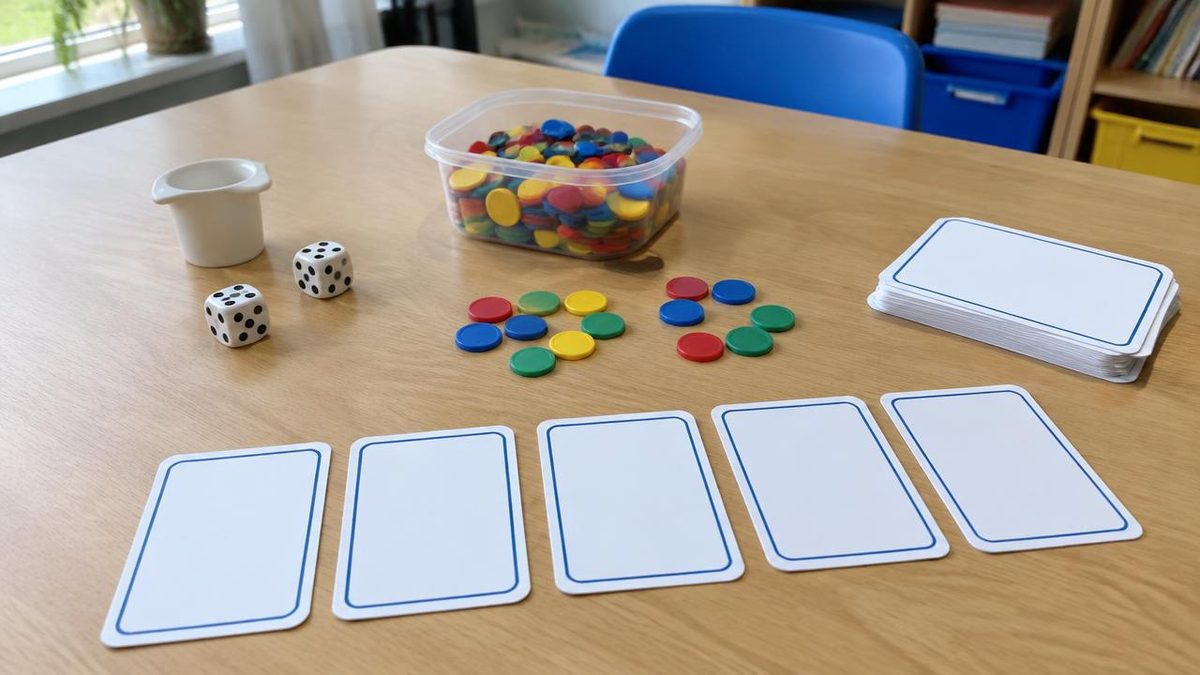
Print, cut, play. Include a one-page set-up sheet and use materials most classrooms already have (dice, counters, cubes).
Match a skill and grade
"Grade 2 addition within 20 games" beats "math fun." If it matches a provincial or state strand, say so.
Add a recording sheet
It gives teachers accountability and a quick way to check understanding.
Bundle by strand
A full strand — number sense, measurement, geometry — makes a natural bundle teachers come back for.
Play through the awkward turns
A game can look clear on paper and still leave players stuck. Test the situations that don't happen on the first easy turn: a tie, an empty card pile, a roll that goes beyond the board or a player who cannot make a valid move.
Write the rule for each situation. Also check whether every player can stay involved until the end. If early elimination leaves a child waiting while others practise, consider a shared target or a replay round instead.
Ask another adult to play from the printed instructions. Don't explain missing rules out loud; note them and improve the guide.
Make the mathematics visible
Decide what children must do mathematically on each turn. Moving a counter after rolling a die doesn't necessarily practise the skill named on the cover.
For an addition game, players might build both quantities, state the equation and explain how they found the total before moving. Keep that routine brief enough that the game still flows.
Include a worked example with a correct representation. Check that pictures, equations and answer keys agree. If more than one strategy is possible, show an example without presenting it as the only acceptable method.
Offer a meaningful adjustment
A useful variation changes the demand while keeping the main routine familiar. You could provide a smaller number range, allow counters or add a prompt asking players to compare two solutions.
Label which components belong to each version. Colour can help organize materials, but include words or symbols too so black-and-white printing still works.
Avoid calling a version "easy" on children's cards. Neutral labels such as Set A and Set B let adults choose materials without turning the groups into public ability rankings.
Make storage part of the instructions
Teachers need to put the game away as well as set it up. Include a small inventory: board, cards, recording pages and any classroom supplies needed. Suggest a simple storage arrangement without requiring a particular container or brand.
Keep cutting lines clear and avoid unnecessary tiny pieces. If components could pose a risk for younger children, state the intended audience and adult supervision needs clearly; don't assume every setting has the same learners.
Describe what buyers will actually prepare
Before creating your selling page, time a practice setup for your own reference. Be precise about whether preparation includes cutting, assembling or gathering supplies rather than promising instant use for a resource that needs substantial work.
A sample turn, component list and honest preparation note help a teacher picture the game in their own classroom before buying.
Does every game need a winner?
No. A shared goal can keep attention on the mathematics rather than speed. Partners might find several ways to make a target number and compare their representations. Explain when play finishes so the activity still has a clear ending, even when nobody is declared the winner.
---
Make something that helps children learn? Start selling on Learning Kindred — you set your prices, keep your rights and can keep selling everywhere else.